By the SimbaApps team | March 2026
---
If you're new to homebrewing, "gravity readings" might sound like a physics experiment. If you've been brewing for a while, they might sound like that thing you keep meaning to do more consistently.
Either way, this is the practical guide we wish someone had handed us when we started. No fluff, no chemistry deep-dives - just the stuff that actually matters when you're standing in front of your fermenter with a hydrometer.

What Gravity Actually Measures
Gravity measures the density of your liquid compared to water. Water has a gravity of 1.000. When you dissolve sugar in water (which is basically what wort is), the gravity goes up. A typical beer wort starts around 1.040-1.060.
As yeast eats the sugar during fermentation, the gravity drops. When it stops dropping, fermentation is done.
That's it. That's the whole concept.
The Two Readings That Matter Most
Out of all the readings you could take, two actually matter:
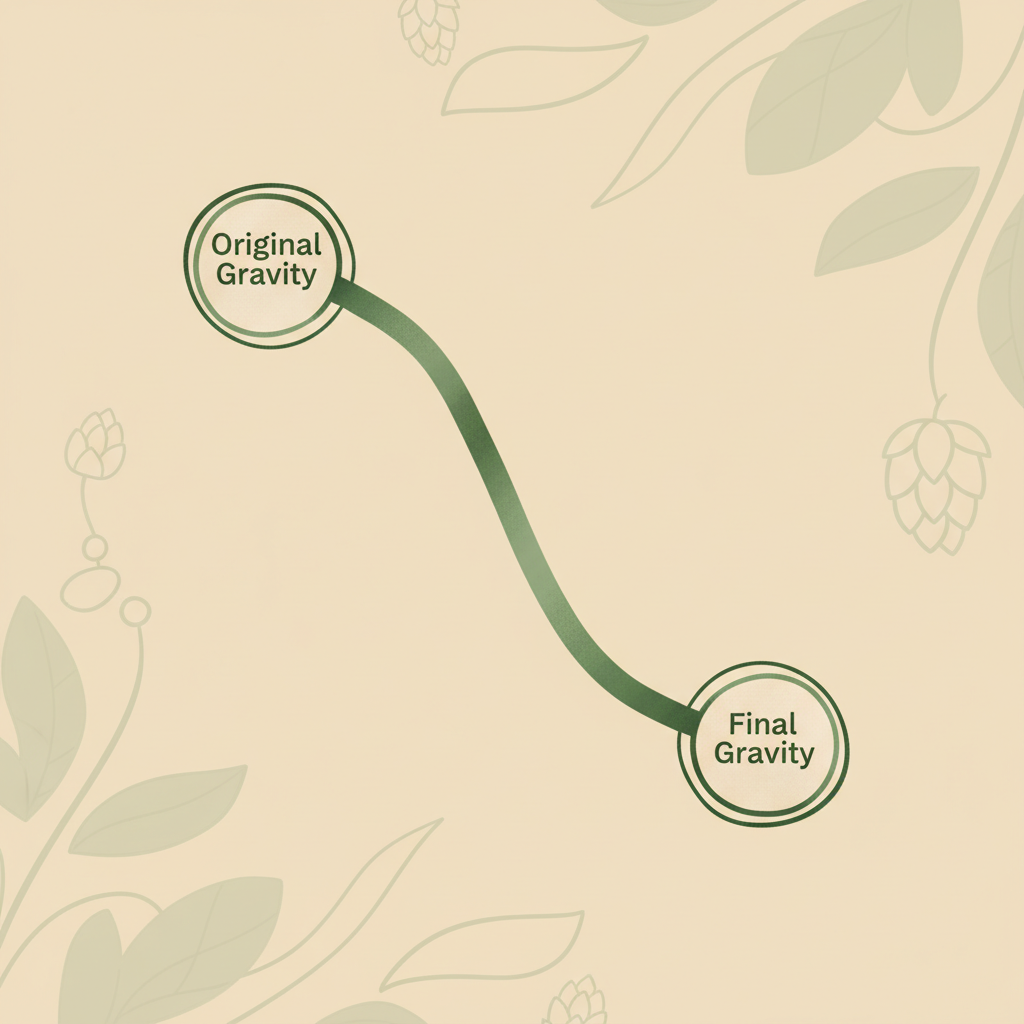
Original Gravity (OG) - taken right before you pitch your yeast. This is your starting point. It tells you how much sugar the yeast has to work with.
Final Gravity (FG) - taken when fermentation is complete. This is your ending point. The difference between OG and FG tells you your alcohol content.
Everything in between is useful context, but those two bookend readings are the ones you absolutely cannot skip.
How Often Should You Check?
This is where it gets personal. Here's what we've seen from talking to brewers:
Beer (ales): Most active fermentation happens in the first 3-5 days. After that, things slow down. A reasonable schedule is checking every 2-3 days for the first week, then every 3-4 days until readings stabilize.
Wine: Fermentation is slower and longer. Some winemakers only check 3 times total - at the start, after about a month, and before bottling. Others check weekly. Both approaches work.
Mead: Similar to wine but can be even slower. Monthly checks are common for long meads. Short meads might follow a beer-like schedule.
Cider: Usually 1-2 weeks of active fermentation. Every few days during that period, then weekly.
The honest answer is: check often enough to catch when gravity stops dropping, but not so often that you're exposing your brew to contamination by opening the fermenter constantly.
The "Two Consecutive Readings" Rule
How do you know fermentation is actually done? The standard rule:
Take two gravity readings 48-72 hours apart. If they're the same (or within 0.001), fermentation is complete.
One stable reading isn't enough. Fermentation can pause and restart (a "stuck fermentation"). Two consecutive identical readings give you confidence that the yeast is actually done working.
This is the reading most homebrewers miss - and it's the one that prevents bottle bombs.
Common Mistakes
Taking a reading too early. The first 24 hours are chaotic. Wait at least 24-48 hours after pitching before your first reading.
Not accounting for temperature. Hydrometers are calibrated to a specific temperature (usually 60F/15.5C). If your sample is warmer, the reading will be slightly off. Most brewing calculators have a temperature correction tool.
Contamination from the sample. Never pour a sample back into the fermenter after testing. Either drink it (brewer's privilege) or dump it. Pouring it back risks introducing bacteria.
Forgetting to record readings. A gravity reading you don't write down is a gravity reading that didn't happen. Use an app, a notebook, or a sticky note on the fermenter. Just write it down.

The Remembering Problem
Here's the real issue: none of this is hard. Taking a reading takes two minutes. The hard part is remembering to do it on the right day, at the right time, consistently.
Life gets in the way. You forget. You get busy. You think "I'll check it tomorrow" and tomorrow becomes next week.
That's exactly why we built GravityPing. It sends you a reminder when it's time to check, you log the reading, and it tracks your fermentation over time. Free to use, no account needed to start.
Because the best gravity reading schedule is the one you actually follow.
---
GravityPing helps homebrewers track fermentation with simple, well-timed reminders. Free to use, with Pro features for SMS/WhatsApp notifications. Built by SimbaApps.