# When Is Fermentation Done? A Practical Guide for Home Brewers
By the SimbaApps team | April 2026
---
You pitched your yeast three days ago. The airlock was bubbling like crazy on day one. Now it's barely moving. The big question: is fermentation actually done, or is it just taking a nap?
This is one of the most common questions in homebrewing, winemaking, and cider making. And the answer isn't as simple as "when the bubbling stops."
Here's how to know for sure.
The Only Reliable Method: Gravity Readings
Airlock activity, foam, color changes, smell - these are all clues. But none of them are proof.
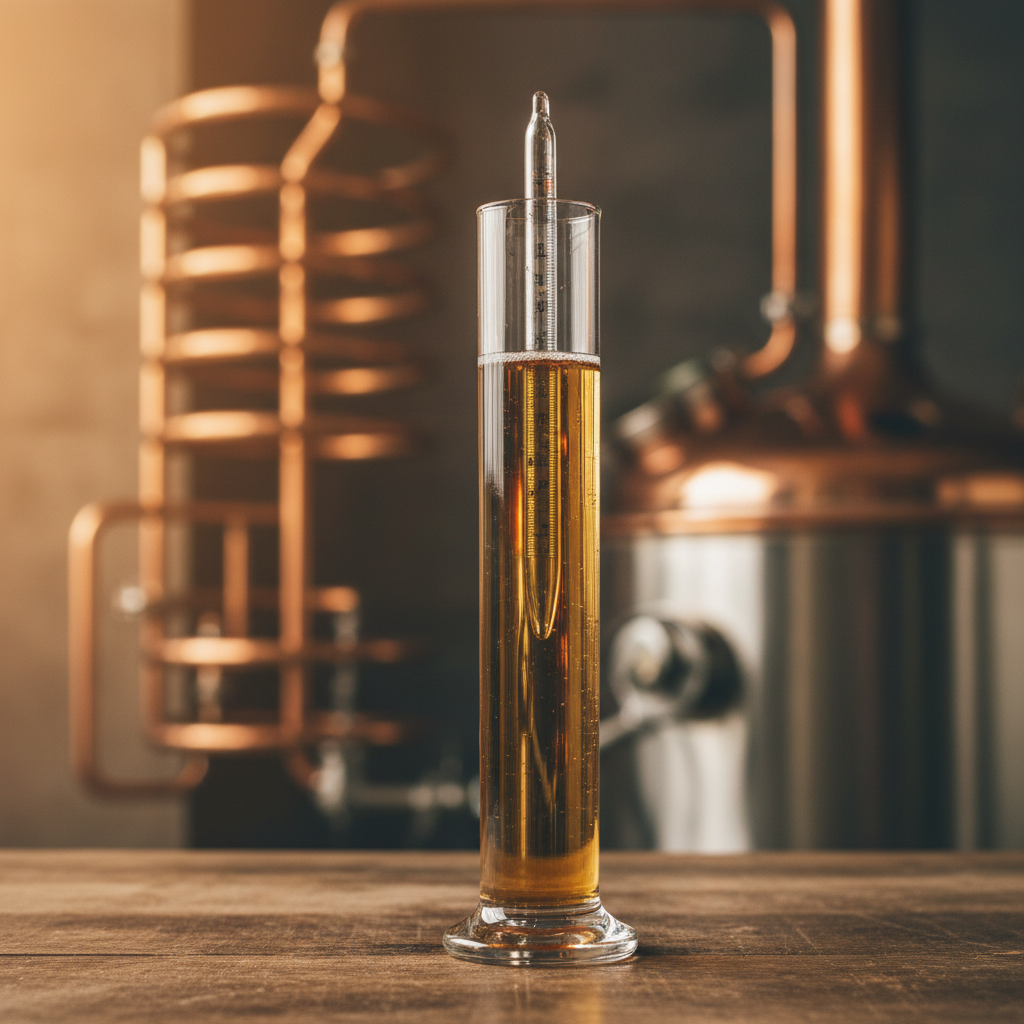
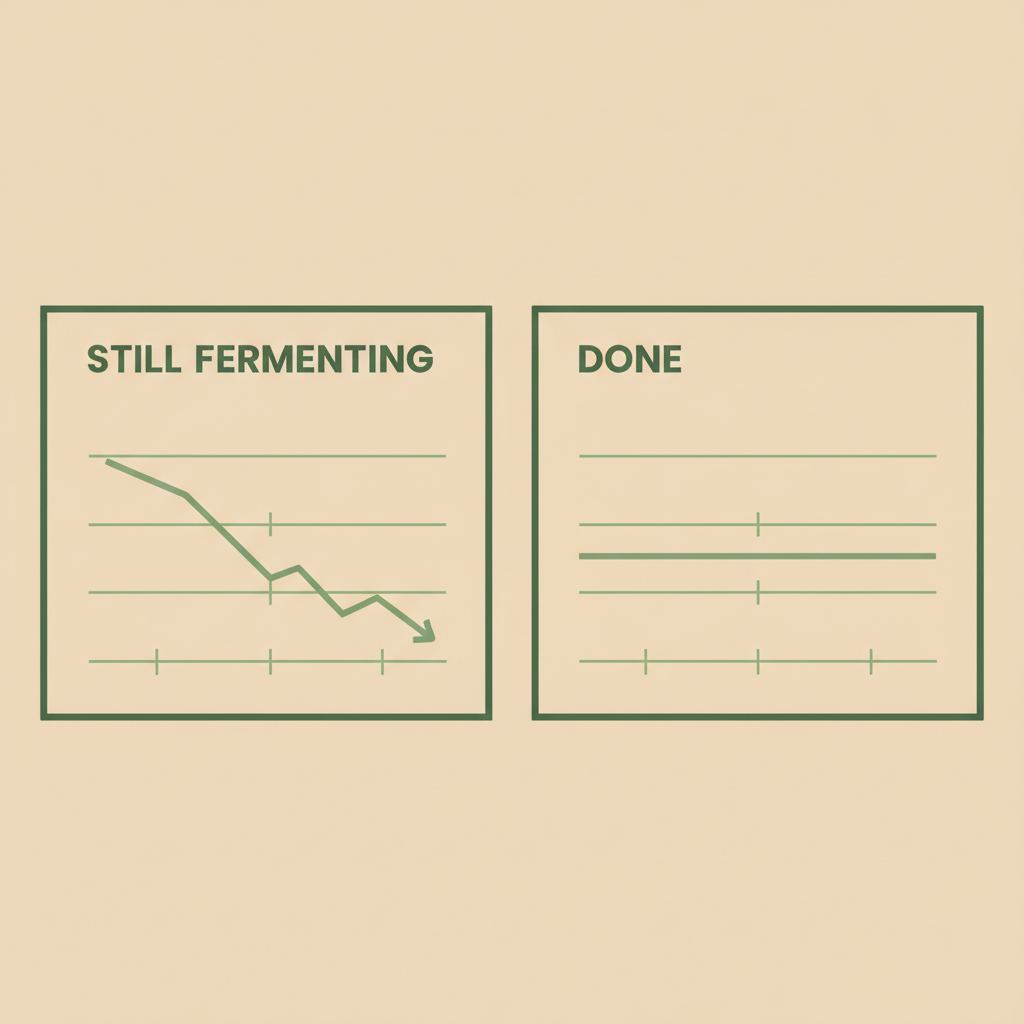
The only reliable way to know if fermentation is complete is to take gravity readings. Specifically: two identical gravity readings, 48 to 72 hours apart.
Here's why. During fermentation, yeast converts sugar into alcohol and CO2. As sugar gets consumed, the density of your liquid drops. A hydrometer or refractometer measures that density (called "specific gravity" or just "gravity").
When gravity stops dropping, fermentation has stopped. But one stable reading isn't enough. Fermentation can pause temporarily - yeast gets stressed from temperature swings, runs out of a nutrient, or just takes a break. This is called a "stuck fermentation," and it can restart unexpectedly.
Two identical readings 2-3 days apart confirm that the yeast is truly done. No more sugar to eat, no more CO2 to produce, no more changes to the density.
The magic numbers:
- Beer: typically finishes between 1.008 and 1.016
- Wine: often goes dry, finishing at 0.995 to 1.000
- Cider: usually finishes between 0.998 and 1.005
- Mead: varies widely, from 0.990 (dry) to 1.020+ (sweet)
These are general ranges. Your target depends on the recipe and yeast strain.
What About the Airlock?
The airlock is the most watched, least reliable indicator of fermentation status.
A quiet airlock does NOT mean fermentation is done. Here's why:
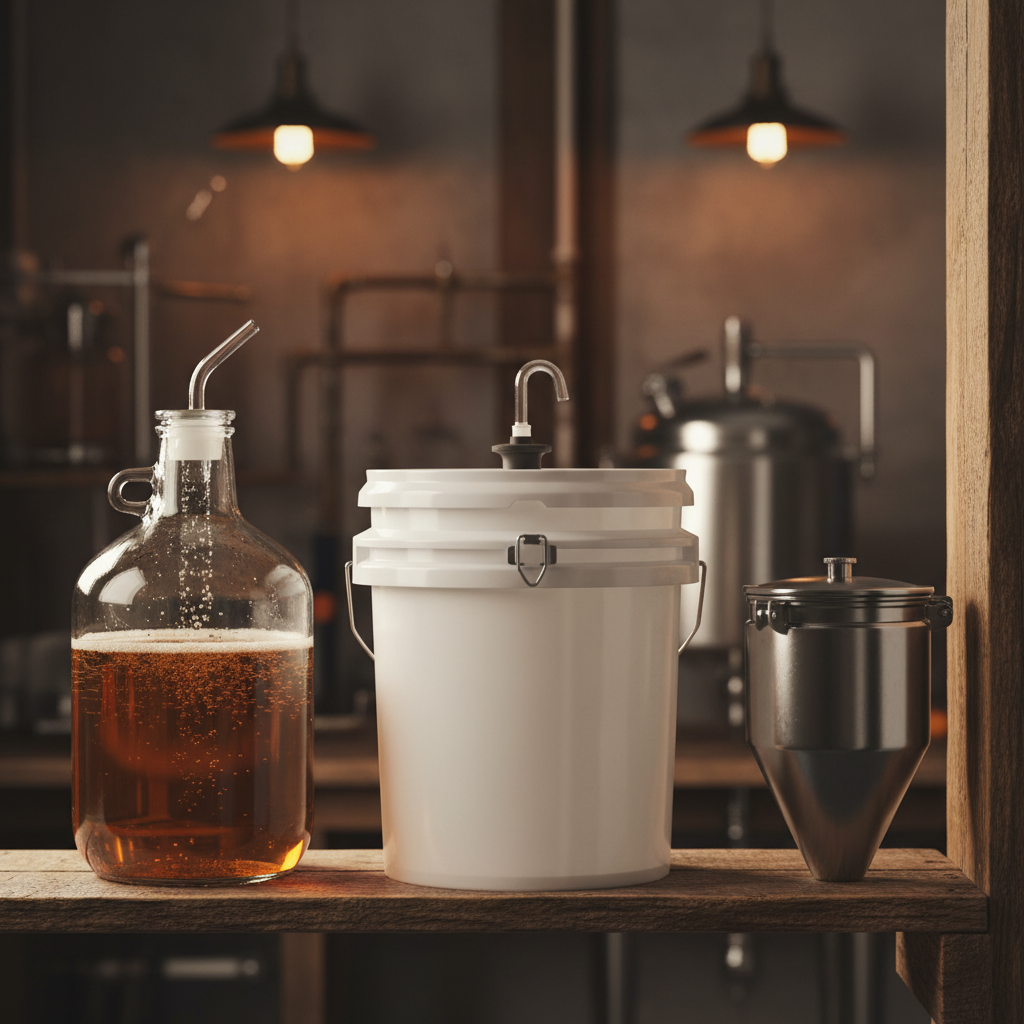
- Poor seal: If your lid or bung doesn't seal perfectly, CO2 escapes without pushing through the airlock. Fermentation could be raging while the airlock sits still.
- Temperature drop: Cooler temperatures slow yeast activity. The airlock slows down, but fermentation isn't finished.
- Late-stage fermentation: The final gravity points happen slowly. CO2 production drops below what you can see in the airlock, but the yeast is still working.
A bubbling airlock means fermentation is happening. A quiet airlock means... maybe it's done, maybe not. You need gravity readings to know for sure.
Typical Timelines (Don't Treat These as Rules)
Every fermentation is different, but here are rough timelines to set expectations:
Beer (ales): Active fermentation for 3-7 days. Most ales are fully fermented within 2 weeks. Lagers take longer (4-8 weeks at cold temperatures).
Wine: Primary fermentation takes 1-2 weeks. But wine often goes through a secondary fermentation (malolactic) that can take months. Total time from crush to bottle: 6 months to 2 years.
Cider: Active fermentation for 1-2 weeks, with a long slow tail. Many cider makers wait 4-6 weeks before bottling.
Mead: Notoriously slow. Active fermentation can last 2-4 weeks, but meads often benefit from months of aging. Some mead makers wait 6-12 months before bottling.
The common thread: patience. Rushing to bottle is the number one cause of overcarbonated bottles (or worse, bottle bombs).
The Bottle Bomb Problem
This deserves its own section because it's the biggest risk of bottling too early.
If you bottle when fermentation isn't truly complete, the remaining yeast will continue converting sugar in the sealed bottle. CO2 builds up with no way to escape. Pressure rises. Eventually: glass shatters.
Bottle bombs are dangerous. They can spray glass across a room. This isn't a theoretical risk - it happens to homebrewers regularly.
The fix is simple: don't bottle until you have two consecutive stable gravity readings. That's it. Two readings, two days apart, same number. Then you're safe.
How to Take a Gravity Reading
If you're new to this, the process is straightforward.
Using a hydrometer (most common):
- Sanitize a wine thief or turkey baster and your hydrometer
- Pull a sample from your fermenter (enough to float the hydrometer - usually 100-200ml)
- Pour the sample into a tall, narrow container (a hydrometer jar works best)
- Gently lower the hydrometer into the sample and let it float freely
- Read the number where the surface of the liquid crosses the scale (read at the bottom of the meniscus, not the top)
- Record the reading along with the date and temperature
Using a refractometer:
- Place 2-3 drops of your sample on the refractometer's prism
- Close the cover plate and look through the eyepiece
- Read the Brix value where the line crosses the scale
- Convert to specific gravity using an online calculator (important: refractometers need a correction factor once alcohol is present)
Temperature matters. Most hydrometers are calibrated to read accurately at 60F (15.5C). If your sample is warmer or cooler, the reading will be slightly off. Most brewing calculators include a temperature correction tool. For casual brewing, a few degrees won't matter much. For precision, correct every time.
Never pour the sample back. Once you've pulled a sample for testing, drink it or dump it. Pouring it back risks introducing bacteria or wild yeast into your fermenter. Yes, you lose a small amount of beer each time. Consider it the brewer's tax.
What to Do If Fermentation Is Stuck
Sometimes fermentation stops before reaching your target gravity. This is a "stuck fermentation" and it's more common than you might think.
Signs of a stuck fermentation:
- Gravity is higher than expected final gravity
- No airlock activity for several days
- Two readings 48 hours apart are identical, but the number is too high
Common causes and fixes:
Temperature too low. Yeast slows down significantly in cold temperatures. Ale yeast prefers 60-72F (15-22C). If your fermenter is in a cold garage or basement, the yeast may have gone dormant. Move it somewhere warmer and give it a gentle swirl to rouse the yeast back into suspension. Wait a few days and check again.
Temperature too high. Excessive heat (above 75F for most ale yeasts) can stress or kill yeast. If this happened early in fermentation, you may need to pitch fresh yeast. Let the fermenter cool to the proper range first.
Not enough yeast. Underpitching is a common cause of stuck fermentation, especially for high-gravity beers (OG above 1.070). The fix: pitch a fresh pack of yeast. Choose a clean, neutral strain and make sure it's fresh.
Nutrient deficiency. This is especially common with mead and cider, where the base liquid lacks the nutrients that grain-based wort provides. Adding yeast nutrient (DAP or Fermaid-O) can restart a stuck mead fermentation. Follow the manufacturer's dosing instructions.
High alcohol. Some fermentations stall because the alcohol level has reached the yeast's tolerance. Most ale yeasts top out around 8-10% ABV. Wine and champagne yeasts can go higher (14-18%). If you're making a high-gravity brew and fermentation stalls, try pitching a more alcohol-tolerant yeast strain.
When all else fails: Give it time. Many "stuck" fermentations are just slow fermentations. If the gravity is dropping - even slowly - the yeast is still working. Patience is often the best fix.
Common Mistakes
Relying on time alone. "The recipe says two weeks, so it must be done." Recipes give estimates. Your fermentation depends on yeast health, temperature, sugar content, and a dozen other variables. Use time as a guideline, gravity readings as proof.
Tasting as a test. Tasting your brew is great for quality assessment, but it can't tell you if fermentation is complete. An unfinished beer can taste perfectly fine and still have active yeast ready to create problems in the bottle.
Forgetting to take the second reading. You take a reading on Tuesday, it looks stable. Great. But then you forget to take the follow-up reading on Thursday. By the time you remember, it's been a week and you're not sure if the first reading was accurate. This is the most common version of the problem: not the knowledge gap, but the consistency gap.
Staying Consistent
That last point is worth emphasizing. Most homebrewers know they should take two consecutive readings. The challenge isn't knowledge - it's remembering to actually do it on the right days.
This is exactly the kind of problem that a simple reminder solves. Set a schedule, get a ping when it's time to check, log the reading. GravityPing was built for this - it sends you a reminder on your schedule (email on free, WhatsApp/SMS on Pro) so you don't have to remember on your own.
Whether you use an app, a calendar reminder, or a sticky note on your fermenter, the important thing is having a system. The best gravity reading schedule is the one you actually follow.
Quick Reference: Is My Fermentation Done?
- Take a gravity reading with a hydrometer or refractometer
- Write it down (date + reading)
- Wait 48-72 hours
- Take another reading
- Same number both times? Fermentation is done. Safe to bottle.
- Number dropped? Fermentation is still active. Wait and check again.
That's the whole process. Simple, reliable, and worth the patience.
---
GravityPing helps homebrewers stay consistent with gravity readings through well-timed reminders. Free for email, Pro for WhatsApp and SMS. Built by SimbaApps.